We’re studying biology on the farm this winter, especially the relationship between microbiology and macro-biology, and we’re discovering that people and plants have more in common than one might guess. Both derive their health and well-being from a vast, unseen realm, and the connections between what we see and what we don’t see are even more intricate that we imagined, for plants as well as for people.
We’d like to share what we’re learning about those connections in a series of blog posts. The first one focuses on plants.
Plants
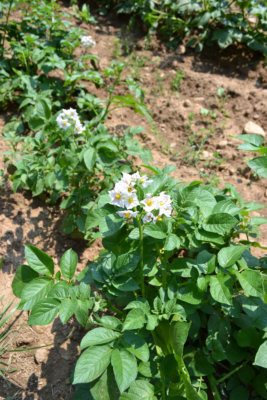 It’s becoming increasingly apparent that large plants grow best in soil that’s full of small plants, especially bacteria and fungi. Most of us associate bacteria and fungi with disease, and it’s true that plants are susceptible to bacterial infection just like people are; but we’re coming to realize that the number of bacterial species that cause damage is much smaller than the number that don’t, and the good ones keep the bad ones in check most of the time.
Studies suggest that a gram of healthy soil contains as many as 40 million bacterial cells, which co-operate to create a fertile ecosystem, some producing exactly the chemicals and nutrients others need to survive. That symbiosis has been clear for a long time, but now we’re beginning to see that it extends beyond the invisible microbial plane into the plant species we see flourishing around us — or failing to flourish. We’re beginning to understand that you can’t disrupt any of those cooperative relationships without sending shock waves through the entire system.
“In natural ecosystems, most nutrients such as nitrogen, phosphorous, and sulfur are bound in organic molecules and are therefore minimally bioavailable for plants,” explain the authors of a recent article in the journal Frontiers in Plant Science. “To access these nutrients, plants are dependent on the growth of soil microbes such as bacteria and fungi, which possess the metabolic machinery to depolymerize and mineralize organic forms of nitrogen, phosphorous, and sulfur.”
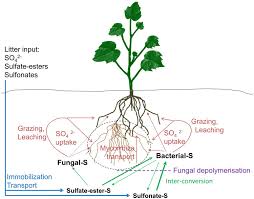 A polymer is a large conglomerate molecule produced when small units of the same substance stick together. The tiny root hairs that connect something like a tomato plant with its soil environment can’t absorb those big conglomerates, and they don’t possess the capacity for reducing them to usable size. Well, it turns out that in undisturbed ecosystems, they don’t need that capacity — it would be redundant — because they’re surrounded by millions of bacteria and fungi that do have it. “In natural settings, these microbial nutrient transformations are key drivers of plant growth, and can sometimes be the rate-limiting step in ecosystem productivity,” the article suggests. In other words, if the microbe population drops, the tomato plant can’t thrive.
The flip side of that relationship works like this: plants like tomatoes, spinach, and broccoli combine carbon with hydrogen through the process known as photosynthesis, and their roots exude the product of that process, carbohydrates, into the soil because the microbes they depend on need those carbohydrates, and they don’t have the capacity to photo-synthesize them. “The growth of soil microbes is usually carbon-limited, so the high amounts of sugars, amino acids, and organic acids that plants deposit into the rhizosphere represent a valuable nutrition source,” the authors explain.
 A wrinkle in this symbiotic relationship emerges when we acknowledge that tomatoes and broccoli are different plants with different nutritional needs, which means they need different microbial communities. They also excrete different photosynthetic substances into the soil, and those different substances attract the particular microbes that each variety of tomato or spinach or cucumber specifically needs. “It has been shown that plant root exudates contain components used in below-ground chemical communication strategies, such as flavonoids, strigolactones, and terpenoids,” the authors explain.
In other words, the macro-organisms appear to be calling out for the specific micro-organisms that will optimize their growth, and the micro-organisms respond because living in the root-shed of those specific macro-organisms will optimize their growth. The consequence of that symbiotic communication is what we call nutritional density: a high concentration of substances that make plants healthy. And it’s beginning to look like disrupting that communication is the first step toward disease.
Check this space next week for a discussion of that symbiotic communication in people.