Strawberries have been at the top of The “Dirty Dozen” list of fruits and vegetables that are found to have the highest levels of pesticide residues, as reported by the Environmental Working Group (EWG). When it comes to labeling a strawberry as organic, it must meet specific criteria set by regulatory bodies. The term “organic” signifies that the strawberry was grown without the use of synthetic pesticides, fertilizers, or genetically modified organisms. To label a strawberry as organic, it needs to be certified by a recognized certification body that ensures compliance with organic farming practices.
This certification takes a huge amount of time and effort and we commend all farmers who have run the gauntlet of regulation and secured this certification. The initial process alone take 3 years to ensure no synthetic inputs have been used on the ground being certified. But that is just the beginning of the process which is detailed in this article from Modern Farmer: “ Can you Trust the Organic Label?”
At Great Country Farms, we have always thought of ourselves as “simple dirt farmers”. Rather than focusing our efforts on obtaining regulatory certification, we have chosen to excel at employing growing techniques that we believe produce better than organic strawberries.
In the realm of sustainable agriculture, it is crucial to constantly seek out and evaluate better alternatives to traditional organic farming methods. While organic farming has long been praised for its avoidance of synthetic pesticides

and fertilizers, newer approaches such as regenerative agriculture and permaculture are gaining traction for their ability to not only sustain but also regenerate the health of the soil, enhance biodiversity, and increase overall resilience of the ecosystem. These innovative methods focus on building soil health, sequestering carbon, and promoting holistic land management practices that prioritize long-term sustainability and productivity. By embracing these progressive approaches, we can unlock a myriad of benefits that go beyond what traditional organic farming can offer, paving the way for a more regenerative and thriving agricultural landscape.
We want to share the regenerative agriculture techniques and the environmentally friendly approaches that are revolutionizing the way we grow food and improving crop yields and quality.
So, let us share how we grow our strawberries and share why we think our methods are better than organic.
- Growing our own plant starts –Strawberry runners (also called stolons) are horizontal stems that grow out on branching stems from the original “mother plant.” Each runner produces several new “daughter” plants that will grow roots where it touches the soil. Once the new plant is established on its own roots, the runner will dry up to separate the daughter from the mother plant. We harvest these daughter plants each summer and use them to establish our new strawberry beds during our fall planting. This way we know that our starter plants have not been touched by synthetic chemicals.

- Compost Soil Building– Preparation of our strawberry field begins years before we plant the ground. We fortify our fields with natural inputs such as leaves, grass cuttings, coffee grounds, mulch and manure from local horse farms. This compost is mixed together so that microorganisms can break down the natural, carbon-containing. waste into its simplest parts. This process takes months to produce a fiber-rich, carbon-sequestering humus packed with nutrients like nitrogen, phosphorus and potassium. Our composted fields hold in more moisture and provide rich, natural fertilizer to nurture our strawberries and other crops eliminating the need for synthetic fertilizers.
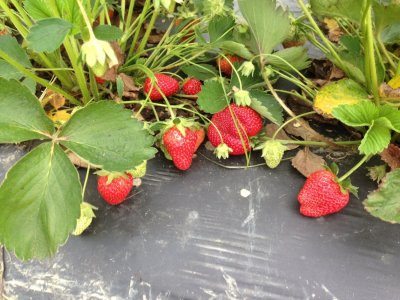
- Plasticulture & Mulch – Plasticulture offers a sustainable and effective alternative to synthetic weed killers minimizing environmental impact and promoting healthy soil. We have a specialized planter that forms the rows and lays out a thin black plastic then covers the edges of the plastic with soil to hold it in place. We hand plant the field by poking small holes in the plastic for the strawberry to grow through. The plastic blocks grow of surrounding plants. With plasticulture, we achieve weed control while helping to improve water retention, reduce erosion, and increase crop yields. This eco-friendly approach not only safeguards the ecosystem but also enhances the overall productivity and sustainability of our strawberry beds enabling us to often secure a third season from each strawberry field.
- Hand Weeding – Hand weeding is another way we eliminate the need for herbicides. It is a labor or love and our rows may look a bit messy as we focus on weeding around the strawberry plants and then mowing in between the rows. We joked about adding a “Weed Dating” event at the farm this season to introduce volunteers to farming and cultivate relationships as well as strawberries.
- Floating Row Covers – These protective white sheets are rolled out over our strawberry plants for the winter. As the spring warms, we remove the cover to encourage plant growth and avoid unwanted fungi. If temperatures are forecasted to dip below 40 degrees Fahrenheit, we put the covers back in place to protect the tender strawberry blossoms from frost. We can cover and uncover the fields 5-10 times a spring season to balance optimal growth with frost protection.
- Fencing & Gates: This really isn’t about organic growing but is mission critical to the success of our crop. Deer simply LOVE strawberries and the tender green plants in the spring are like candy for them to devour. We have an alarm on our phone that reminds us to check fences (and close up the chickens- that is a story for another day) each evening. More labor of love and perhaps all this effort is why there are so few strawberry growers in Northern Virginia!
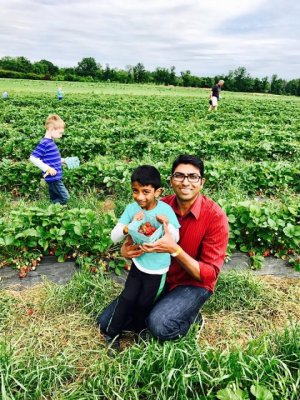
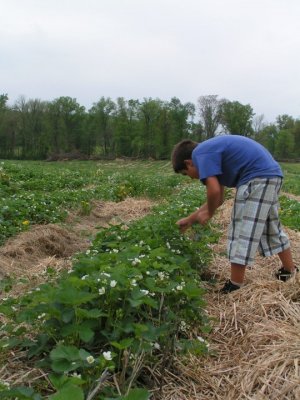 Although we can’t say our pick your own strawberries are organic, we hope you have a better understanding of what we do to grow what we believe are better than organic strawberries. We live on this land and feed our families mostly what we produce here so it is a very personal choice to farm sustainably. Farmer Mark is notorious for saying, “If it were easy, everyone would do it” when it comes to growing strawberries and farming in general. We are honored to be simple dirt farmers and steward our little farm in Bluemont, Va. We hope that when you are asked, “Who’s your Farmer?” you will enthusiastically say, Great Country Farms!