 One hundred and six members responded to our CSA 2018 Survey, and we’re grateful to those people for sharing their thoughts with us. Here’s a summary of what they said.
Features that people especially liked about CSA membership included:
- access to the farm itself
- the wide variety of produce items
- the benefits of freshly-picked food
- investment in the local food-shed
- learning about new foods and food production
The most common requests were these:
- a greater variety of vegetables and fruits
- the opportunity to choose some items over others
- better quality control
- changes to the you-pick system
- more information about specific crops and growing conditions
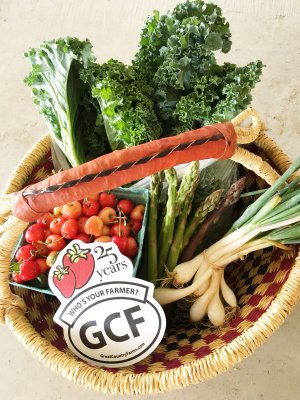
We packed 29 different items in our CSA shares last year, but most of those made fewer than four appearances during the season, which meant shares were heavy in certain items: potatoes, apples, squashes, peaches, and plums. We’re aiming for a higher number of items next year, more like 40, and we hope to reduce the dominance of certain items.
Some members requested that we add specific items next year, including carrots, celery, collards, arugula, pac choi, broccoli, cauliflower, sweet peas, field peas, turnips, and mustard greens. Last year our broccoli, cauliflower, collards, sweet peas, and turnips all failed due to record rainfall. We will try them again this year, with successive plantings in different locations. We also hope to offer herbs, such as basil, parsley, cilantro, and thyme. Carrots don’t seem to like our soil for some reason, and celery doesn’t like our hot weather.
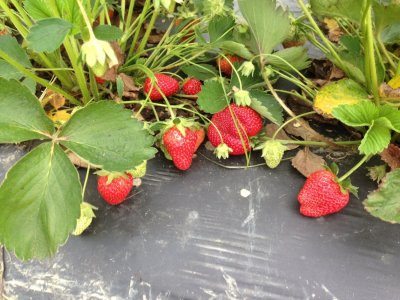 Customizing group site shares is not feasible for us, but it is possible to trade some items for others if you pick up your share at the farm. Items in high demand and limited quantity, such as berries, are pretty much fixed, but other items may sometimes be swapped on a case-by-case basis. Just talk to Mark in the market.
Several people asked about the possibility of coming to the farm every-other week and picking a double you-pick bonus. That system would work with many items, depending on field conditions and picking pressure. If you’d like to try that schedule, let us know. We realize that the wagon ride schedule is sometimes restrictive, and we continue to explore ideas for improving that system. We welcome your suggestions.
With regard to information: we are pleased to learn that some of you would like to know more about field conditions. During this off season, we’ve been thinking a lot about the relationship between the soil microbiome and the vitality of our crops, and we’d be happy to share what we’re learning with you. We’re also increasingly interested in nurturing the human microbiome, which appears to be the frontier of health and wellness; in fact, we hope to build a microbiome-friendly culture at Great Country Farms.
 Another problem we hope to resolve this year is packing items in quantities too small to be useful. One member has suggested including a double portion of gradually-ripening crops like okra in half the shares one week and then packing a double portion in the other shares the following week. A solution like that might work in many cases. If you have other suggestions, please let us know.
Again, our thanks for taking time to offer that information. Your feedback is one of our most valuable resources.