 In a world where the goodness of anti-bacterialism is taken for granted, encouraging bacteria to infect your food seems almost as wrong as flag-burning. Don’t the hand-sanitizing stations screwed to the walls of all our public buildings confirm the status of bacteria as a public enemy? The word itself sounds unhealthy, like saying it too often might turn your tongue white or make your skin break out.
 But the truth is that we need bacteria to stay alive — certain kinds, anyway. By one measure, nearly 1,000 different species of bacteria live in your intestinal tract, and research has shown that their health is crucial to yours. Healthy gut bacteria seem to have wide-ranging positive effects on your immune system, your central nervous system, your endocrinal system, your heart, your brain, and your capacity to absorb nourishment.
One of the easiest ways to nurture your gut biome is to eat fermented vegetables. You may associate term ‘fermented’ with the process that creates wine or beer, but the agent involved in that process is yeast, not bacteria, and the by-product is alcohol, which has largely toxic effects on your body, not the beneficial effects of the lactic acid produced by the lactobacillus family.
Fermentation is a traditional food-preservation technique which uses small quantities of salt to 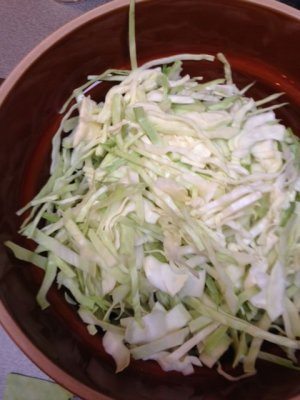 prohibit the growth of harmful bacteria and encourage the growth of lactobacillus, which thrives in the presence of salt. The fermented vegetable most of us are familiar with is sauerkraut, which is cabbage preserved by lactobacillus, and while cabbage is included in many popular ferment recipes, it’s far from the only vegetable that lends itself to fermentation. Almost any vegetable can be fermented, but the process alters flavor in unpredictable ways which may not harmonize with the original taste and aroma of all foods.
One of the great things about fermentation is that anyone can do it, at home, with no fancy equipment. All you need is a big bowl, a big jar or crock, and some salt. Most recipes recommend mineral salts rather than iodized table salts. The quality of your fermented end-product will depend on several factors, including the quality of the food you start with. Local, sustainably-grown vegetables are usually best in taste and nutritional density,  but conventional supermarket produce works, too. Many recipes and how-to guides are available online, most of which encourage you to make your brine by mixing salt and water, but it’s also possible to extract brine water from the cabbage itself with the help of salt and hand strength.
Fermenting is a great way to make the most of those large quantities of carrots, beans, squash, or cabbage that come in all at once when you start to eat according to the seasons. It’s also a great way to discover flavors you’ve never tasted before — so why not plunge in? Happy bacteria to you!